


DrupalCon Chicago: Wichtige Produkt- und KI-Updates
AI-Translated


„Die Keynote der DrupalCon Chicago blickt auf die 25-jährige Reise von Drupal zurück und skizziert, wie sich die Plattform entwickelt. Sie behandelt wichtige Updates wie Drupal CMS 2.1, KI-gesteuerte Content-Workflows und effizientere Methoden zum Erstellen von Websites. Zusammen weisen diese Updates auf die zukünftige Richtung von Drupal hin.“
Im Laufe der Jahre haben wir bei OpenSense Labs an mehreren DrupalCons teilgenommen, darunter auch an der DrupalCon Chicago, und jede bot eine andere Erfahrung. Was jedoch konstant geblieben ist, ist Dries' Keynote.
Sie ist nach wie vor ein Moment, in dem die Community zusammenkommt, um über die Fortschritte, Herausforderungen und die zukünftige Ausrichtung von Drupal nachzudenken.
Dieses Jahr fühlte sich bedeutsamer an als sonst, da Drupal sein 25-jähriges Jubiläum feiert. Als erste DrupalCon Chicago nach diesem Meilenstein hatte die Keynote ein anderes Gewicht. Es ging nicht nur um aktuelle Updates, sondern darum, den Ton für das Kommende anzugeben.
Natürlich ist dies der Zeitpunkt, an dem die Community genau zuhört, wie sich Ideen entwickeln und wie sich die Plattform weiterentwickelt.
Hier sind die wichtigsten Highlights der DrupalCon Chicago, der Driesnote, und was sie für die Zukunft von Drupal bedeuten.
Drupals Ökosystem-Dreieck: Das dreiteilige System
Seit über 25 Jahren basiert Drupal auf einem starken und ausgewogenen Fundament, das oft als Dreieck beschrieben wird. An der Spitze steht Drupal als Plattform, gefolgt von Agenturen und Organisationen, die es für Unternehmen zum Leben erwecken, und schließlich der Open-Source-Community, die kontinuierlich zu seinem Wachstum beiträgt.
Dieses dreiteilige Ökosystem hat sich durch mehrere Wellen des technologischen Wandels als widerstandsfähig erwiesen und seine Stärke und Anpassungsfähigkeit im Laufe der Zeit unter Beweis gestellt.
Mit dem rasanten Aufstieg der KI werden jedoch alle drei Säulen dieses Ökosystems gleichzeitig gestört, was wichtige Fragen aufwirft, wie sich Drupal in dieser sich wandelnden Landschaft entwickeln wird.
„Was passiert, wenn alle drei Seiten dieses Dreiecks gleichzeitig gestört werden?“ – Dries Buytaert
Genau diese Sorge bildet die Grundlage für die neuesten Produktupdates, da sich der Fokus nun auf die Anpassung und Stärkung von Drupal für die KI-gesteuerte Zukunft verlagert.
Wichtige Ankündigung während der DrupalCon Chicago
Die DrupalCon Chicago bereitete die Bühne für das Kommende und stellte wichtige Updates für Drupal CMS vor und signalisierte das schnelle Wachstum seines Marktplatz-Ökosystems.
1. Drupal CMS 2.1 & Marktplatz
Auf Produktebene stellte Dries Drupal CMS 2.1 vor, das auf Drupal Core 11.3 basiert, und betonte die kontinuierlichen Bemühungen, dessen Akzeptanz zu verbessern. Dieses Update stärkt Drupal CMS weiter als maßgeschneiderte Plattform mit vielen integrierten Funktionen, bei der die Benutzerfreundlichkeit eine Schlüsselpriorität bleibt.
Neben der Benutzerfreundlichkeit wurden auch die Leistung erheblich verbessert. In den letzten 18 Monaten hat Drupal eine Reduzierung der Datenbankabfragen für ungecachte Seiten um 50 % erreicht, einer der bemerkenswertesten Leistungssteigerungen der letzten Jahre.
Diese Verbesserungen kommen Drupal CMS direkt zugute und gewährleisten eine bessere Leistung für Websites, die auf die neueste Version aktualisiert werden.
„Auf der DrupalCon Vienna, vielleicht vor sechs Monaten, hatten wir eine Website-Vorlage. Nun, ich freue mich, heute bekannt geben zu können, dass wir 11 Website-Vorlagen und einen Marktplatz haben.“ – Dries Buytaert
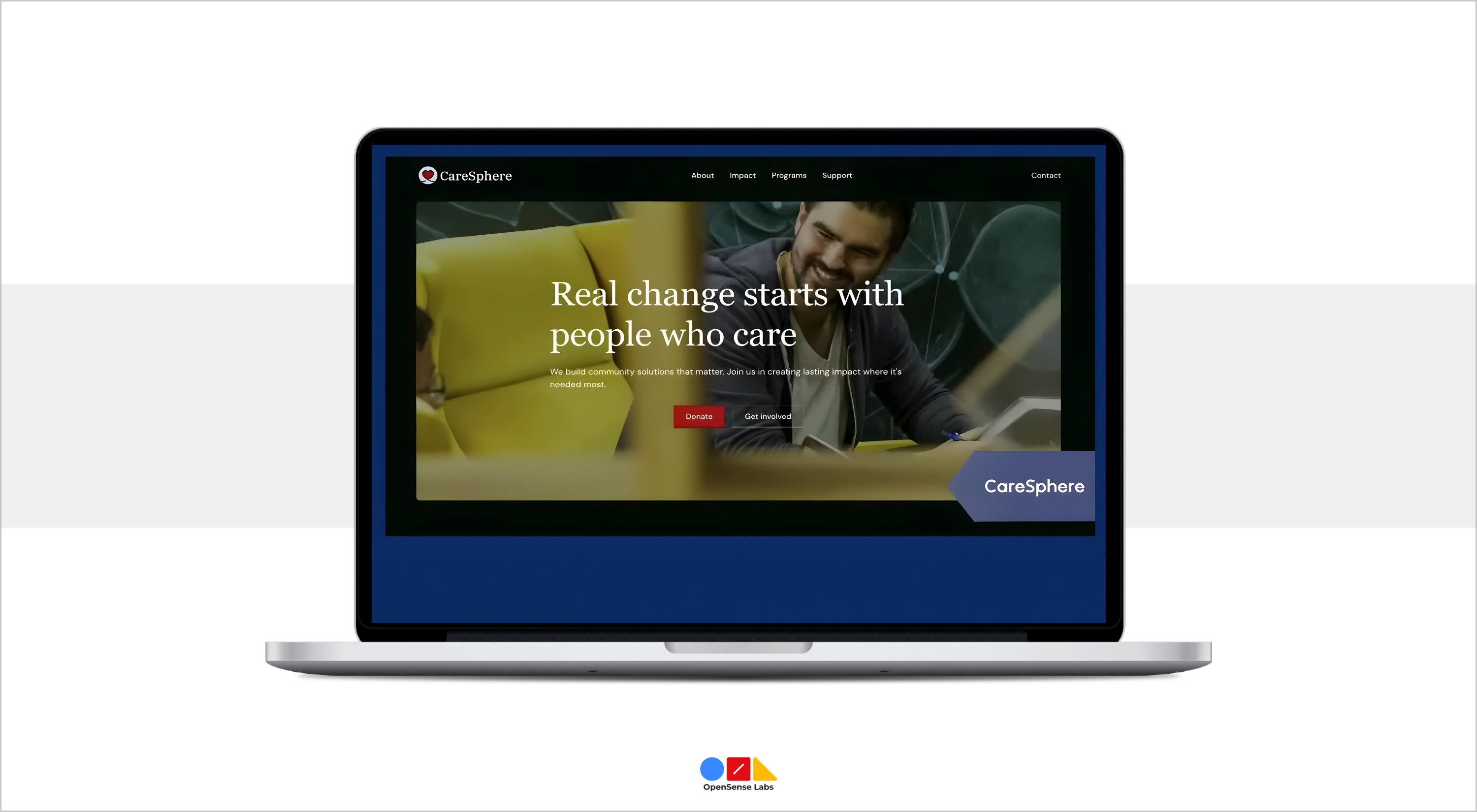
Auf der DrupalCon Chicago wird der Marktplatz als ein früher, aber bedeutsamer Schritt nach vorn positioniert, der sich darauf konzentriert, gebrauchsfertige Lösungen mit gut gestalteten Themes bereitzustellen, um eine breitere Akzeptanz von Drupal zu unterstützen. Er schafft auch Möglichkeiten für Agenturen, wiederverwendbare Lösungen zu entwickeln und zu vertreiben, wodurch ihre Sichtbarkeit und potenzielle Lead-Generierung verbessert werden.
Als Teil dieses wachsenden Ökosystems hat OpenSense Labs CareSphere beigesteuert, die erste auf Non-Profit-Organisationen ausgerichtete Vorlage auf dem Drupal-Marktplatz, die Organisationen dabei helfen soll, missionsorientierte digitale Erlebnisse effizienter zu starten.
2. Content Control Center
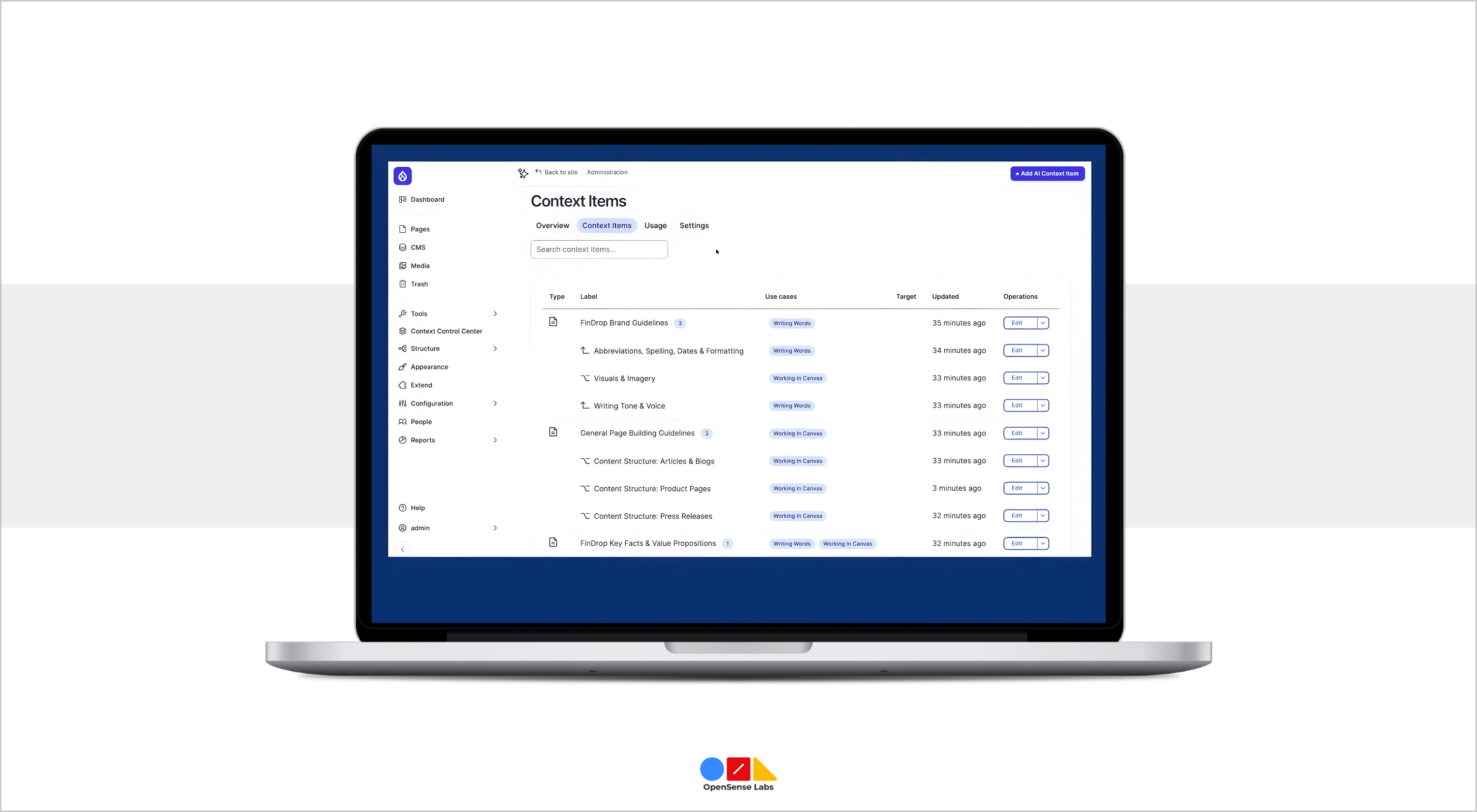
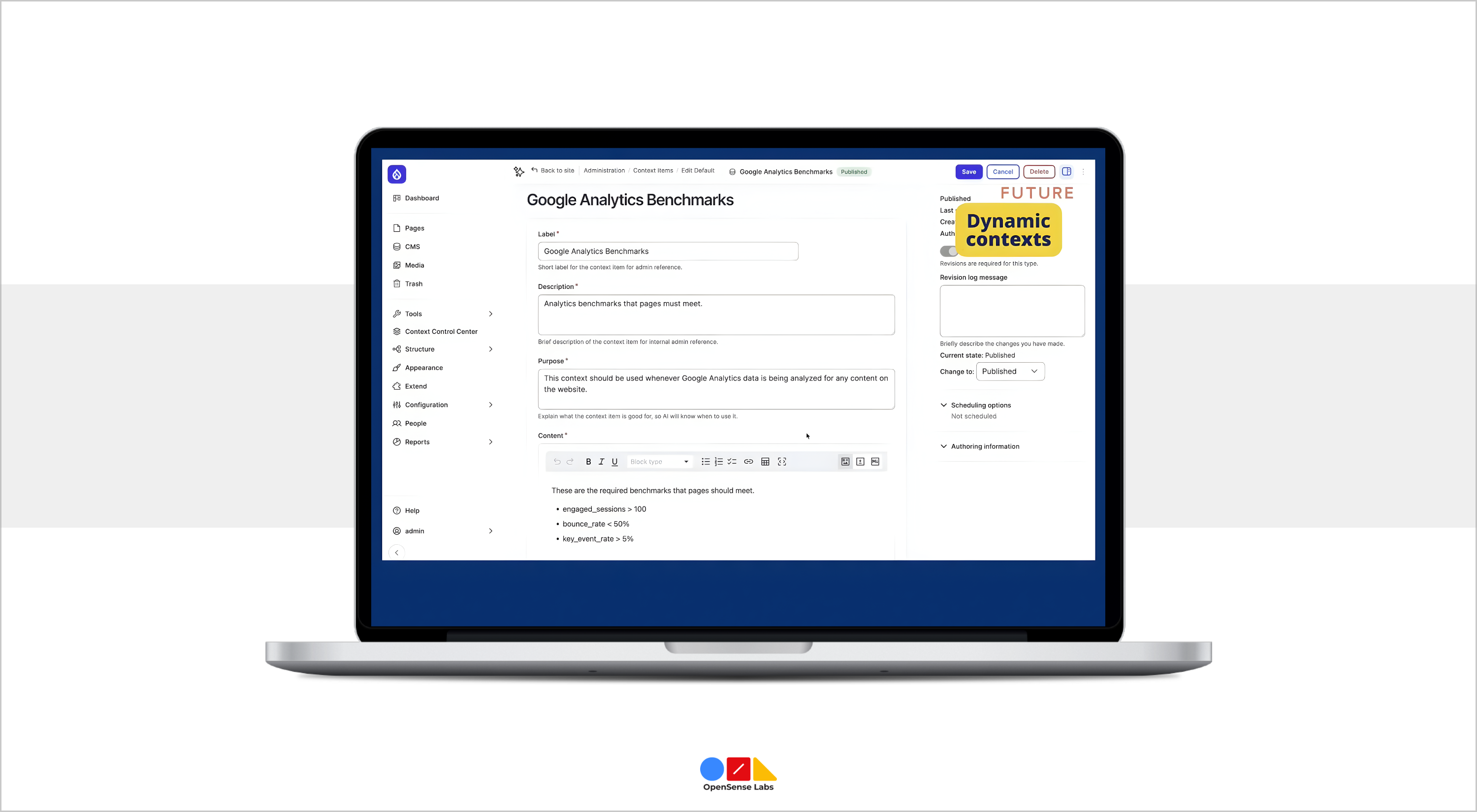
Das Context Control Center war ein weiterer wichtiger Schwerpunkt der Keynote. Zuerst als grober Prototyp auf einer früheren DrupalCon vorgestellt, hat es sich seitdem erheblich weiterentwickelt und nähert sich nun der Produktionsreife.
Auf der DrupalCon Chicago erklärte Dries, wie es organisatorisches Wissen in verschiedene Ebenen strukturiert, wie zum Beispiel:
- Markenrichtlinien (einschließlich Formatierungsregeln und Abkürzungen)
- Ton, Stimme und visuelle Ausrichtung
- Content-Strategien für verschiedene Seitentypen
- Wichtige Wertversprechen und unterstützende Materialien
- Personas und Kundenprofile
- Metriken und Analysen, einschließlich Live-Datenintegrationen
Eine wichtige Richtung für dieses System ist seine Fähigkeit, über statische Inhalte hinauszugehen. Es ist darauf ausgelegt, sich mit externen Tools wie Analyseplattformen und CRM-Systemen zu verbinden, um sicherzustellen, dass die KI mit aktuellen und relevanten Informationen arbeitet.
Es lädt auch selektiv Kontext basierend auf der Aufgabe, zum Beispiel die Verwendung von produktbezogenem Kontext beim Erstellen einer Produktseite, anstatt von nicht verwandten Inhaltsstrukturen.
3. Drupal Canvas & KI-Integration
Eine weitere wichtige Ankündigung auf der DrupalCon Chicago war die Veröffentlichung der Drupal Canvas CLI & KI-Integrationen, ein Tool, das die Lücke zwischen Design-Outputs und produktionsreifen Drupal-Builds schließt.
Im Kern nimmt die Canvas CLI ein fertiges Design (oft mit Tools wie Lovable erstellt) und wandelt es in eine strukturierte Drupal-Implementierung um. Sie verwendet eine Reihe vordefinierter Skill-Dateien, um visuelle Elemente in Drupal-Komponenten, Inhaltstypen und Konfigurationen abzubilden.
So funktioniert es:
- Die Designeingabe wird in die CLI eingespeist
- Skill-Dateien interpretieren das Layout, die Abschnitte und Elemente
- Diese werden in Drupal-kompatible Strukturen wie Komponenten und Inhaltsmodelle übersetzt
- Das System generiert den erforderlichen Code und die Konfiguration innerhalb von Drupal
Das Ergebnis ist ein strukturiertes Setup mit wiederverwendbaren Komponenten, definierten Inhaltsmodellen und vorhandenen Bearbeitungsfunktionen.
Der Prozess ist nicht vollständig automatisiert. Ein Ingenieur überprüft und validiert in der Regel die Ausgabe, um sicherzustellen, dass sie den realen Anforderungen entspricht.
Mit diesem Ansatz kann das, was traditionell Tage manueller Entwicklung in Anspruch nehmen würde, jetzt in nur wenigen Stunden abgeschlossen werden.
4. KI-generierte Inhaltserstellung
Eine wichtige Ergänzung, die in der Keynote hervorgehoben wurde, waren KI-Agenten, die Inhalte nach der Veröffentlichung überwachen und optimieren.
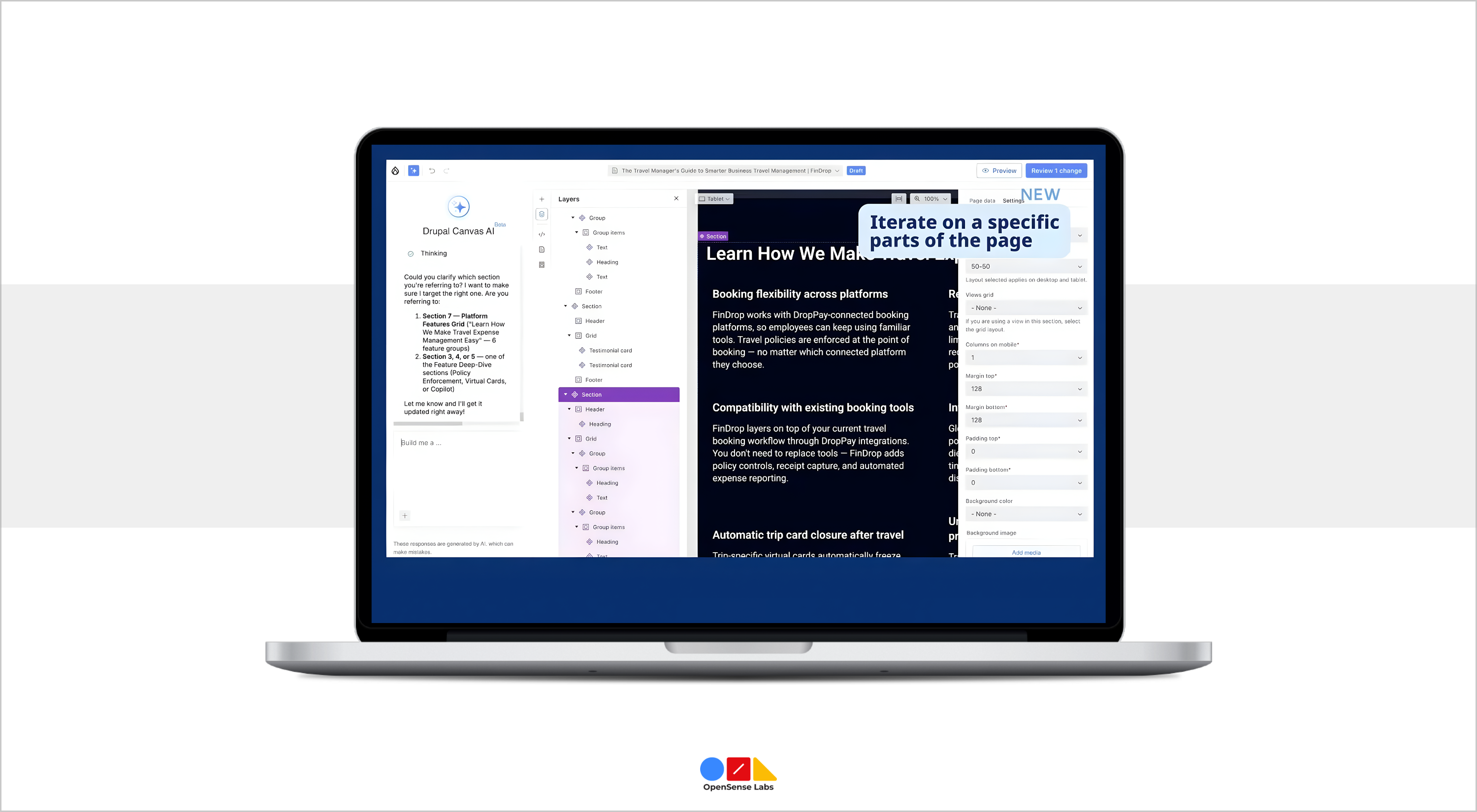
Mit Drupal Canvas AI können unstrukturierte Eingaben wie einfache Textdokumente nun in vollständig strukturierte Webseiten umgewandelt werden. Das System ist in der Lage:
- Den Seitentyp zu identifizieren (z. B. Produktseite, Landingpage)
- Relevante Markenrichtlinien aus dem Context Control Center abzurufen
- Klärende Fragen zu stellen, bevor die Ausgabe generiert wird
- Inhalte in Drupal-Komponenten mit korrektem Layout, Typografie und Medien zu strukturieren
Die generierte Ausgabe stimmt mit den Kernstärken von Drupal überein, einschließlich strukturierter Inhalte, wiederverwendbarer Komponenten und Governance.
Die Demo zeigte auch, wie KI unterstützen kann bei:
- Verbesserung von Inhalten mit relevanten Bildern
- Erstellung dynamischer Elemente wie FAQs
- Verknüpfung verwandter Inhalte mithilfe semantischer Suche
- Generierung strukturierter Daten für bessere Sichtbarkeit in KI-gesteuerten Sucherlebnissen
Die wichtigste Erkenntnis ist, dass KI keine Rollen ersetzt, sondern sie erweitert. Sie vereint Fähigkeiten, die denen von Design, Entwicklung und SEO ähneln, sodass Teams sich stärker auf die Entscheidungsfindung konzentrieren können, während repetitive Arbeiten reduziert werden.
Wenn Sie erkunden möchten, was heute bereits möglich ist, haben wir auch Drupal KI-Module für die Inhaltserstellung und automatisierte Workflows wie Field Widget Actions besprochen, die beide Schritte in Richtung des Gezeigten sind.
5. KI-Agenten für kontinuierliche Inhaltsoptimierung
Die Keynote stellte auch KI-Agenten vor, die sich auf die Überwachung und Optimierung von Inhalten nach der Veröffentlichung konzentrieren. Diese neue Funktion ändert den Ansatz, indem sie eine kontinuierliche, KI-gesteuerte Inhaltsoptimierung ermöglicht.
Mit dieser Funktion können Teams:
- Spezifische Seiten als hochpriorisiert markieren
- Leistungsziele wie Absprungrate, Engagement oder Konversionen definieren
- Diese Metriken kontinuierlich durch einen KI-Agenten überwachen
Anstatt nur Probleme zu melden, geht die KI einen Schritt weiter, indem sie die Leistung im Kontext analysiert. Sie kann:
- Bestehende Inhalte mit aktualisierten Eingaben aus dem Context Control Center vergleichen
- Lücken erkennen, die durch Änderungen in Geschäftsdaten, Nachrichten oder Strategie verursacht wurden
- Spezifische Verbesserungen basierend auf den neuesten verfügbaren Informationen empfehlen
- Inkonsistenzen, einschließlich potenzieller Markenabweichungen, erkennen, bevor Updates live gehen
Dieser Ansatz verbindet auch Erkenntnisse aus mehreren Systemen wie Analysetools, CRM-Plattformen und Content-Workflows, um sicherzustellen, dass Inhalte mit Echtzeit-Geschäftsänderungen übereinstimmen.
Drupals andere 2 Teile: Ökosystem & Community-Einfluss
Neben den großen Veränderungen, die auf Drupal zukommen, sprach Dries auch darüber, was diese Verschiebungen für das breitere Ökosystem bedeuten. Er konzentrierte sich auf ihre Auswirkungen auf Agenturen und die Community und wie sich jeder Teil anpassen muss, während sich Drupal weiterentwickelt.
Für Agenturen
Drupal entwickelt sich über ein Website-Erstellungstool hinaus zu einem System zur Erfassung und Skalierung von Fachwissen.
Mit Funktionen wie dem Context Control Center, Content-Modellierung, Workflows und Website-Vorlagen können Agenturen ihre Erfahrungen in strukturierte, wiederverwendbare Lösungen umwandeln.
Auf diese Weise kann Drupal Agenturen dabei helfen, ihr Fachwissen konsistenter anzuwenden, ihr Wissen über Projekte hinweg zu skalieren und das zu operationalisieren, was zuvor informell oder erfahrungsbasiert war.
Er positionierte dies als eine bedeutende Chance für Agenturen in einer KI-gesteuerten Landschaft.
Gleichzeitig schaffen Initiativen wie Drupal Pivot-Events Raum für offene Gespräche, die Agenturen helfen, Herausforderungen zu meistern und sich in einer KI-gesteuerten Landschaft anzupassen.
Für die Community
Da KI die Hürde für Beiträge senkt, wird die Aufrechterhaltung von Qualitätsstandards noch wichtiger. Der Fokus sollte auf verantwortungsvollem Beitragen liegen, anstatt mehr beizutragen. Wie Dries betonte:
„Mitwirkende sollten keinen Code einreichen, den sie nicht verstehen.“
Letztendlich spiegelt die DrupalCon Chicago 2026 eine breitere Verschiebung wider, wie Drupal als Plattform, Ökosystem und Community wächst.
Der Weg nach vorn erfordert kontinuierliches Lernen, Experimentieren und aktive Teilnahme. Aber wie immer liegt Drupals größte Stärke in seiner Community und ihrer Fähigkeit, sich gemeinsam weiterzuentwickeln.
Erkunden Sie Drupal für Ihr nächstes Projekt?
Bei OpenSense Labs verfügen wir über mehr als 13 Jahre Erfahrung mit Drupal und erstellen Unternehmensplattformen, Intranets und komplexe Webanwendungen. Wir tragen zur Drupal CMS-Community bei (einschließlich Careshpere, der ersten Non-Profit-Website-Vorlage) und nutzen täglich KI, um unsere Entwicklungsprozesse zu verbessern.
Wenn Sie ein neues Drupal-Projekt starten, von einer anderen Plattform wechseln oder erkunden möchten, wie KI integriert werden kann in Ihre Content-Operationen, ist unser Team für Sie da. Informieren Sie sich über unsere Entwicklungsdienstleistungen, um mehr über unseren Ansatz zu erfahren, oder kontaktieren Sie uns direkt, um über Ihr Projekt zu sprechen.
Abonnieren
Verwandte Blogs
Was ist HTMX & Wie es für serverseitig gesteuerte Weboberflächen funktioniert?

„HTML wurde entwickelt, um Benutzerinteraktionen zu erklären. HTMX verlagert dieses Verhalten zurück an seinen Ursprung,…
DrupalCamp Delhi kehrt nach 6 Jahren zurück: Das erwartet Sie
„Nach der COVID-Zeit kehrt das Camp zum ersten Mal nach Delhi zurück. Im Laufe der Jahre haben sich das Camp und die lokale…
Drupals Rolle als MCP-Server: Ein praktischer Leitfaden für Entwickler
„Das MCP bietet einen universellen offenen Standard, der es KI-Modellen ermöglicht, sicher auf reale Datenquellen…